Search



WORLDWIDE SHIPPING
fast, flexible, secure options

ONLINE SUPPORT 24 / 7
anytime, anywhere help

MONEY BACK GUARANTEE
shop with confidence

WIDE SELECTION
every day low prices
DIY Parts & Components
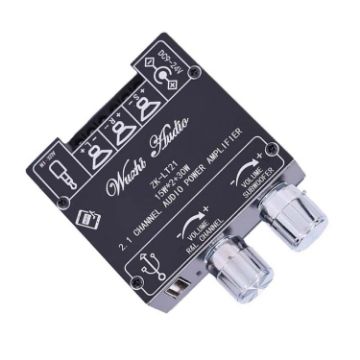
ZK-LT21 Mini Bluetooth 5.1 Receiving Audio Module With Power Amplifier Digital D Stereo Dual Channel
- Speaker impedance: 4-8 ohms
- Speaker power: 10-50W
- Input current: 3A
- Input voltage: 9-24V
- Function: Support Wuzhi Audio App
- Audio input: BT+AUX+USB+USB sound card
- Power output: 15W+15W+30W
- Number of channels: 2.1
A$18.22
A$22.05
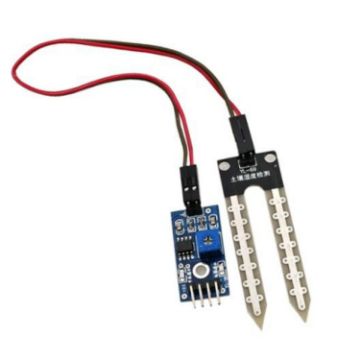
Soil Hygrometer Detection Module
- Humidity range: 0-100
- Material physical properties: semiconductor
- Output signal: digital
- Working voltage: 3.3V-5V
- Size: 3cm * 1.6cm
- Features: LM393 chip, stable operation, fixed bolt holes for easy installation, dual output mode of the module, simple digital output, more accurate analog output, and adjustable sensitivity
A$7.27
A$8.35
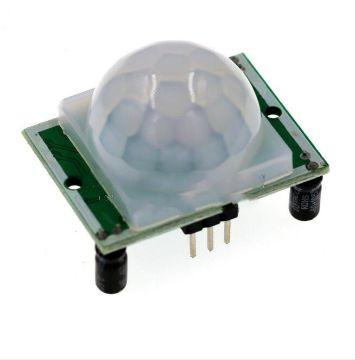
HC-SR501 Module Human Infrared Sensor Module SUNLEPHANT Pyroelectric Infrared Sensor
- Operating voltage range: DC voltage 5-20V
- Static current: <65uA
- Level output: 3.3 V high / low 0V
- Trigger mode: L non-repeatable trigger / H repeat trigger (default repeat trigger)
- Delay time: 0.5-200S (adjustable) can be made in the range of a few seconds - tens of minutes
- Blocking time: 0.2S can be made in the range of a few seconds - tens of seconds
- Circuit board dimensions: 32mm*24mm
- Sensing range: <120 degree cone angle, in 7m
A$9.03
A$10.57
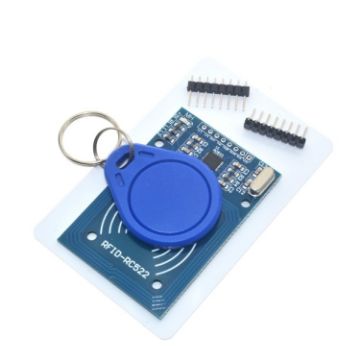
MFRC-522 RC522 RFID RF IC Card Sensor Module with S50 Fudan Card
- Package includes: RFID-RC522 module X1, standard S50 blank card X1, S50 special-shaped card (as shown in the shape of the key ring); a straight row and a bent row of pins;
- Working current: 13-26mA / DC 3.3V
- Idle current: 10-13mA / DC 3.3V
- Sleep current: <80uA
- Peak current: <30mA
- Working frequency: 13.56MHz
- Supported card types: Mifare1 S50, mifare1 S70, mifare UltraLight, mifare Pro, mifare Desfire
- Product physical characteristics: Size: 40mm 60mm
A$8.15
A$9.46
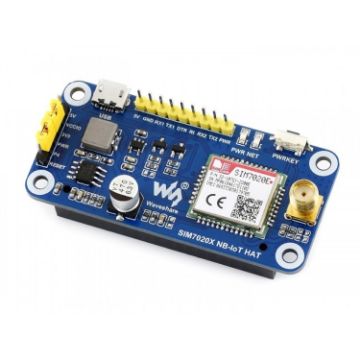
Waveshare NB-IoT HAT for Raspberry Pi, for Europe, Asia, Africa, Australia
- NB-IoT HAT for Raspberry Pi, Based on SIM7020E, B1/B3/B5/B8/B20/B28 Bands
- Applicable Region
- SIM7020E is mainly applicable in Europe, Asia, Africa, Australia.
- Please check the supported bands according to your local service provider when placing order.
- Overview
- This is an NB-IoT (NarrowBand-Internet of Things) HAT for Raspberry Pi, controlled via serial AT commands, supports communication protocols like LWM2M/COAP/MQTT, etc. Due to the advantages of low delay, low power, low cost, and wide coverage, it is the ideal choice for IoT applications such as intelligent instruments, asset tracking, remote monitoring, and so on.
- Raspberry Pi connectivity, compatible with any revision
- Support communication protocols such as LWM2M/COAP/MQTT/TCP/UDP/HTTP/HTTPS, etc.
A$36.44
A$41.90
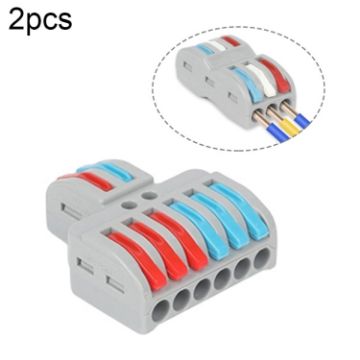
2pcs SPL-62 2 In 6 Out Colorful Quick Line Terminal Multi-Function Dismantling Wire Connection Terminal
- Material: PA nylon shell, stainless steel shrapnel, electrolytic copper nickel-plated tin contacts
- Weight: About 3.21g/piece with two inputs and two outputs, about 4.55g/piece with three inputs and three outputs, about 9.9g/piece with two inputs and four outputs, about 10.18g/piece with two inputs and six outputs, three inputs About 12.5 g/piece for six-out, 18.3 g/piece for three-in and nine-out, 13.14 g/piece for four-in and four-out, and 15.8 g/piece for five-in and five-out
- Stripping length: About 11-12mm
- Wiring specifications: SPL series and LT-2/LT-3 can be connected to 0.4-2.5 square millimeters of multi-strand flexible wire/0.5-4 square millimeters of single-strand hard wire, LT series can be connected to 0.4-4 square millimeters of multi-strand flexible wire / 0.5-6 square millimeters single-strand hard wire
- Rated voltage: 250V (LT-2/LT-3 is 250/600V)
- Rated current: SPL series 32A, LT series 36A (where LT-2/LT-3 is 40A)
- Features: PA engineering plastic, not easy to change color, not easy to deform, flame retardant insulation, high temperature resistance, durable, easy to install, hard and flexible wire can be inserted, easy installation, fast and simple wiring, multi-strand flexible wire, single-strand Hard wires, etc. can be inserted directly, with strong tightness and not easy to fall off
A$8.37
A$10.38
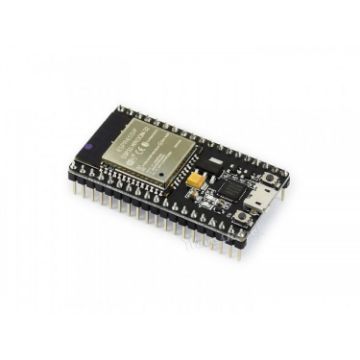
Waveshare NodeMCU-32S ESP32 WiFi+Bluetooth Development Board
- Overview
- This is the NodeMCU development board based on ESP32, features WiFi+Bluetooth connectivity, onboard CP2102 and keys. What's more, all the I/O pins of ESP-WROOM-32 module are accessible via the extension headers.
- Thanks to the rich open-source resources, it supports development in various ways such as Lua/AT commands/MicroPython/Arduino/IOT source code, etc. helps you to fast prototype IoT applications.
- Onboard ESP-WROOM-32 module
- Onboard CP2102, USB to UART converter
- USB port for power input, firmware programming, or UART debugging
- 2x19pin extension headers, breakout all the I/O pins of the module
- 2x keys, used as reset or user-defined
A$22.65
A$26.28
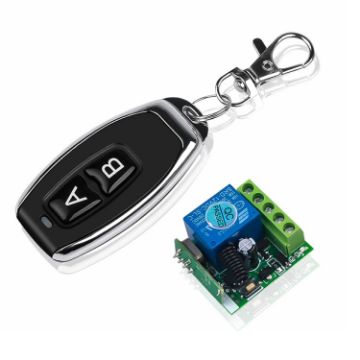
DC12V 1CH RF Remote Control Switch/10A Relay/433MHZ Switch Receiver
- . Technical parameters:
- Working voltage: DC12V (3V/6V/9V/24V can be customized)
- Static working current: 10mA
- Working temperature: -40 degrees Celsius - +80 degrees Celsius
- Receiving sensitivity: greater than or equal to -95dB
- Working frequency: commonly used 315MHZ, 433.92MHZ (others can be customized)
- Output current: less than or equal to 10A
- Working mode: inching, self-locking, interlocking, delay (adjustable)
A$15.23
A$17.52
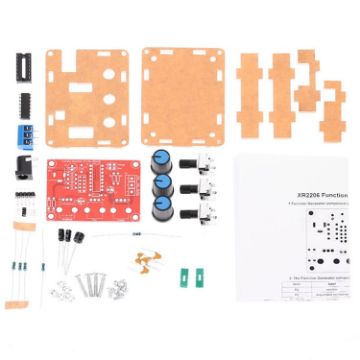
XR2206 High Precision Signal Generator DIY Kit Sine Triangle Square Waves 1Hz-1MHz Frequency Range, Specification: Parts
- Power supply voltage: 9-12VDC input
- Waveforms: square, sine and triangle waves
- Impedance: about 600 ohms
- Frequency: 1Hz-1MHz
- Sine wave:
- Amplitude: 0-3V (9V DC input)
- Distortion: Less than 1 percent (at 1kHz)
- Flatness: +0.05dB 1Hz-100kHz
A$10.88
A$13.27
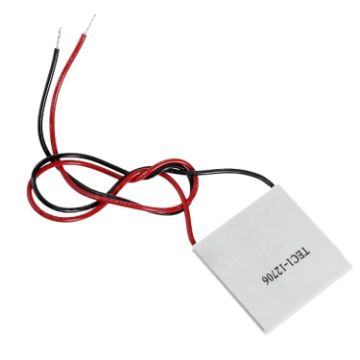
LDTR-WG0227 TEC1-12706 40x40mm Thermoelectric Cooler Peltier Refrigeration Plate Module, 12V 60W
- Its work is characterized by side refrigeration and side fever
- Hot and cold on both sides of the temperature difference of 68 degrees
- Connected to the 12-volt power supply cooling piece on both sides there will be difference in temperature, side cold side of the heat, do not long power cooler radiator, otherwise it will cause cooler internal overheating and burning
- These devices must be used in conjunction with a heat sink to avoid burned
- Each device is full inspected and tested
- Fitted with 6-inch insulated leads
- Size: 40mm x 40mm
- Operates from 0~15.2V and 0~6A
A$9.34
A$10.92
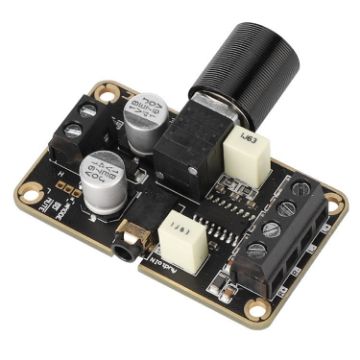
PAM8406 Digital Power Amplifier Board DIY Small Speaker 5W+5W Dual Channel Stereo Doco Ding 5V Amplification Module
- Pure black and gold plated circuit board, imported KEMET audio capacitors, high capacity filter capacitors per channel. Special order pure black copper terminals, gold plated audio input terminals
- Protection: power input reversal protection, short circuit, overheating, over EMI
- Low quiescent current, noise suppression
- External amplifier type selection function (MODE: high level class D, low level class AB, factory default high level)
- External shutdown (SD: chip shutdown at low level, factory default high level)
- External mute (MUTE: low level mute, factory default high level)
- Input method: Single-ended
- Output power: 5W 2 ohms 5V; 3W 4 ohms 5V; 1.8W 8 ohms 5V
A$15.50
A$18.76
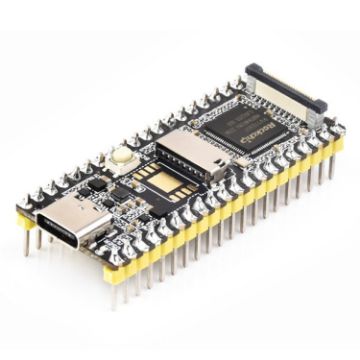
Waveshare LuckFox Pico RV1103 Linux Micro Development Board with Header
- Single-core ARM Cortex-A7 32-bit core, integrated NEON and FPU
- Built-in Rockchip's self-developed fourth-generation NPU, with high calculation accuracy and support for int4, int8, and int16 mixed quantization. The computing power of int8 is 0.5 TOPS, and int4 can reach 1.0 TOPS
- Built-in self-developed third-generation ISP3.2, supports 4 megapixels, and has various image enhancement and correction algorithms such as HDR, WDR, and multi-level noise reduction.
- Powerful encoding performance, supports intelligent encoding mode and adaptive throttling according to the scene, saving more than 50% bit rate than conventional CBR mode, making camera images higher-definition, smaller in size, and doubling the storage space
- The built-in RISC-V MCU supports low power consumption and fast startup, supports 250ms fast image capture and simultaneous loading of the AI model library, achieving "one second" face recognition
- Built-in 16-bit DRAM DDR2, capable of meeting the required memory bandwidth
- Integrated built-in POR, audio codec and MAC PHY
- Processor: Cortex [email protected] + RISC-V
A$19.97
A$24.56

NEED HELP?
Payment options
