Search



WORLDWIDE SHIPPING
fast, flexible, secure options

ONLINE SUPPORT 24 / 7
anytime, anywhere help

MONEY BACK GUARANTEE
shop with confidence

WIDE SELECTION
every day low prices
DIY Parts & Components
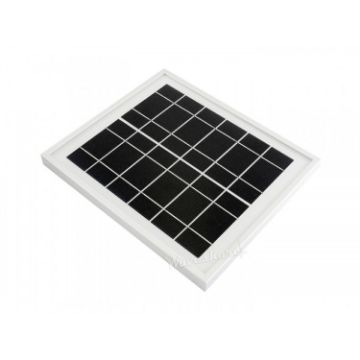
Waveshare Solar Panel (6V 5W)
- Specifications
- 1.Solar cell type: 156 monocrystalline cell
- Surface: toughened glass
- Frame material: anodic oxidation aluminum alloy
- Back board material: 0.25mm PET
- Power: 5.0W 5%
- Operating voltage: 6.0V 5%
- Operating current: 833mA 5% (max)
A$25.11 A$28.86
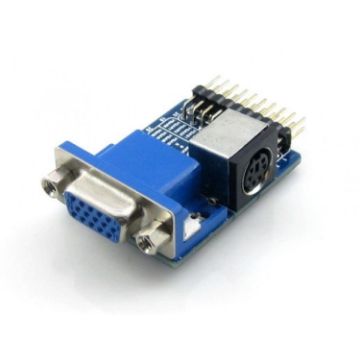
Waveshare VGA PS2 Board
- Overview
- The VGA PS2 Board is an accessory board designed for testing VGA and/or PS2 interfaces. It integrates VGA connector, PS2 connector, and control interface in one small module.
- The VGA PS2 Board comes with ready-to-use demo codes as well.
- Features
- VGA interface, PS2 interface, control interface
A$13.08 A$15.05
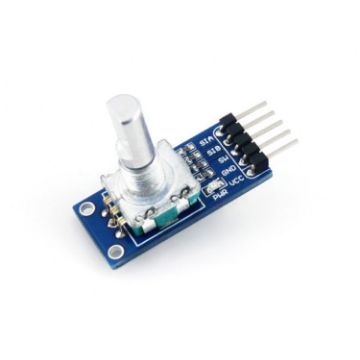
Waveshare Rotation Sensor
- Overview
- Detects clockwise/anti-clockwise rotations: degrees and laps
- Pulses per lap: 15
- Power: 3.0V ~ 5.3V
- Dimension: 32.1mm * 15.4mm
- Mounting holes size: 2.0mm
- Applications
- Positioning in Industrial Controls
A$12.08 A$14.51
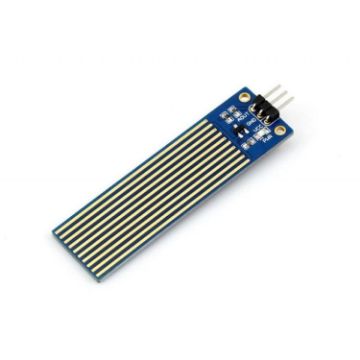
Waveshare Liquid Level Sensor
- Overview
- Output voltage boosts along with the immersion depth of the module
- Detection depth: 48mm
- Power: 2.0V ~ 5.0V
- Dimension: 19.0mm * 63.0mm
- Mounting holes size: 2.0mm
- Applications
- Water level alarm
A$11.63 A$14.18
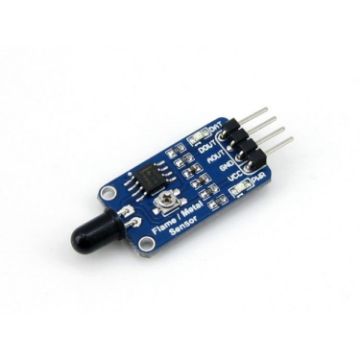
Wareshare Flame Sensor
- Overview
- 1. Sensitive to flame spectrum
- Features wide range voltage comparator LM393
- Adjustable sensitivity
- Signal output indicator
- Spectrum range: 760nm ~ 1100nm
- Detection angle: 0 - 60 degree
- Power: 3.3V ~ 5.3V
A$11.63 A$13.83
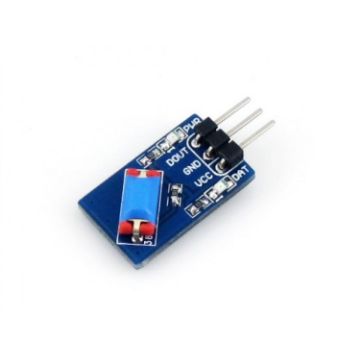
Waveshare Tilt Sensor
- Overview 1. Detects shake signal 2. Signal output indicator 3. Dimension: 19.0mm * 16.0mm Applications 1. Shake detection 2. Guard alarm 3. Smart car 4. Electric bricks
A$11.63 A$14.18
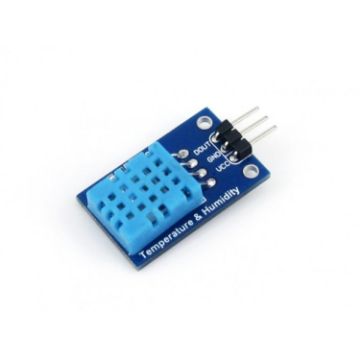
Waveshare DHT11 Temperature-Humidity Sensor
- Temperature-Humidity Sensor, DHT11 Onboard
- Overview
- This is a calibrated digital temperature and humidity module with onboard sensor DHT11. It can be used for detecting ambient temperature and humidity, through the standard single-wire interface.
- Temperature
- Resolution : 1 degree C
- Accuracy : +/-2 degree C
- Measuring range : 0 degree C ~ 50 degree C
- Humidity
A$12.92 A$15.37
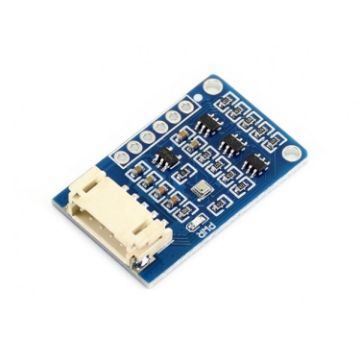
Waveshare BMP388 High Precision Barometric Pressure Sensor, Accurate Altitude Tracing
- BMP388 High Precision Barometric Pressure Sensor, Altitude / Barometric Pressure / Temperature Measuring, I2C/SPI Interface
- Overview
- This is a 24-bit high precision barometric pressure sensor, which allows accurate altitude tracing, as well as barometric pressure / temperature measuring. It supports both I2C and SPI interfaces, also is compatible with 3.3V/5V voltage levels.
- Due to its ultra small form factor, low power consumption, low noise and high precision, the BMP388 Barometric Pressure Sensor is suited for applications such as drones, accurate altimeter, environment monitoring, and IoT projects, and so on.
- Supports I2C (default) / SPI interface
- Onboard voltage level translator, compatible with 3.3V/5V operating voltage
- Comes with development resources and manual (examples for Raspberry Pi/Arduino/STM32)
- Operating voltage: 3.3V/5V
A$28.59 A$33.72
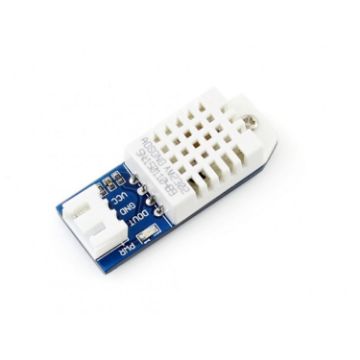
Waveshare DHT22 Temperature-Humidity Sensor
- Overview
- This is a calibrated digital temperature and humidity module with onboard sensor DHT22 (AM2302), which features higher accuracy and wider measuring range than DHT11.
- It can be used for detecting ambient temperature and humidity, through the standard single-wire interface.
- Temperature
- Resolution : 0.1degree C
- Accuracy: +/-0.5 degree C
- Measuring range: -40 degree C ~ 80 degree C
- Humidity
A$19.76 A$23.52
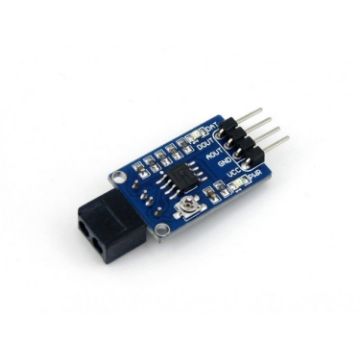
Waveshare Infrared Reflective Sensor
- Overview
- 1. Reflective infrared Transceiver
- Features wide range voltage comparator LM393
- Adjustable sensitivity
- Signal output indicator
- Specifications
- 1. Power: 3.0V ~ 5.3V
- Dimension: 25mm * 15.9mm
A$15.68 A$18.50
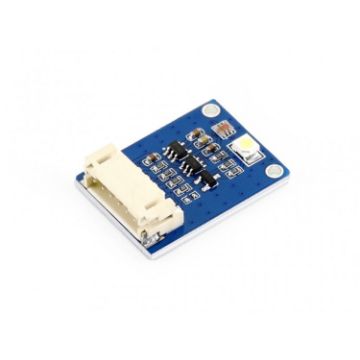
Waveshare TCS34725 Color Sensor Module, High Sensitivity, I2C interface
- Overview
- This is a color sensor module based on TCS34725, will output RGB data and light intensity through the I2C interface. Its advantages include high sensitivity, wide dynamic range, accurate measuring, etc.
- Features
- 1. Onboard TCS34725FN, embedded ADC, high sensitivity, wide dynamic range
- I2C communication, uses a few pins
- Integrates IR blocking filter, minimizes the IR spectral component of the incoming light
- Outputs RGB data without white balance
- Outputs light intensity, feels the light like human eyes
A$20.26 A$24.92
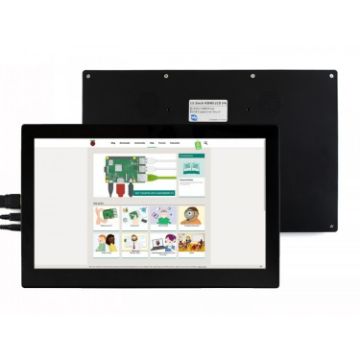
Waveshare 13.3 inch IPS 1920x1080 Capacitive Touch Screen LCD with Toughened Glass Cover, Supports Multi mini-PCs, Multi Systems
- 13.3inch IPS screen,1920x1080 hardware resolution
- Toughened glass capacitive touch panel, 6H hardness
- Support popular mini PCs such as Raspberry Pi, Jetson Nano, BB Black, as well as general desktop computers
- When works with Raspberry Pi, supports Raspbian/Ubuntu/Kali/Retropie/WIN10 IOT, driver free
- When work as a computer monitor, supports Windows 10/8.1/8/7, ten-points touch, and driver free
- Support popular game consoles like Microsoft XBOX360, Sony PS4, and Nintendo Switch
- Multi languages OSD menu, for power management, brightness/contrast adjustment, etc.
- 3.5mm audio jack, supports HDMI audio output
A$241.75 A$294.95

NEED HELP?
Payment options
