Search



WORLDWIDE SHIPPING
fast, flexible, secure options

ONLINE SUPPORT 24 / 7
anytime, anywhere help

MONEY BACK GUARANTEE
shop with confidence

WIDE SELECTION
every day low prices
Electronics
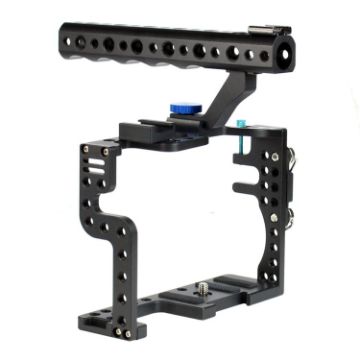
Camera Metal Video Cage Handle Stabilizer for Panasonic LUMIX GH3/GH4 (Black)
- Only for Panasonic LUMIX GH3/GH4 cameras
- Aluminum alloy material, corrosion-resistant, durable
- Stabilize camera movement and reduce shake
- Professional camera protective gear, easy to install
- Process: CNC oxidation
A$52.43 A$61.88
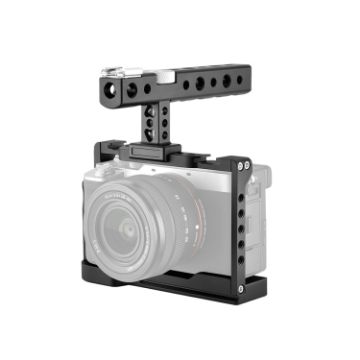
YELANGU C24 Video Camera Cage Stabilizer Kit with Handle for Sony Alpha 7C/A7C/ILCE-7C (Black)
- CNC machining, surface anodizing
- The bottom plate of the cage is design with limit plate to prevent the camera from slipping out
- The cage body is equipped with 1/4 and 3/8 threaded holes, cold shoe mouth, and ARRI gear positioning external interface, which is convenient for external equipment
- The cage body is with 1/4 screw to stably protect the camera from slipping out and falling
- The cage is designed to avoid the position of the camera button, and doest not obscure the button and battery compartment
- With handle: Cold boots and different screw interfaces, can connect with other external devices, with anti slide design. It is convenient and efficient,can use without magic arm.
A$42.06 A$51.31
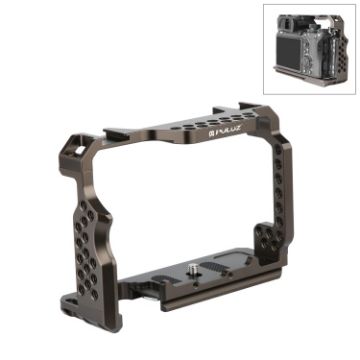
PULUZ Video Camera Cage Stabilizer for Sony A7 III & A7M3/A7R3 & A7R III, without Handle (Bronze)
- CNC machining aluminum, anodized surface, strong and durable
- The cage frame has many holes to connect other accessories
- The cage corner is circle, ergonomic design, comfortable grip
- The cage design avoids the position of camera button and does not cover the button and battery compartment
- There are several 1/4 and 3/8 threaded holes in each direction of the product to facilitate the expansion of other photographic equipment
- Suitable for Sony A7 III & A7M3 / A7R3 & A7R III camera
A$51.25 A$62.53
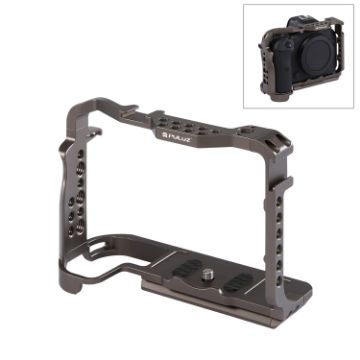
PULUZ Video Camera Cage Stabilizer for Canon EOS R5/R5C/EOS R6/R6 II, without Handle (Bronze)
- CNC machining aluminum, anodized surface, strong and durable
- The cage frame has many holes to connect other accessories
- The cage corner is circle, ergonomic design, comfortable grip
- The cage design avoids the position of camera button and does not cover the button and battery compartment
- There are several 1/4 and 3/8 threaded holes in each direction of the product to facilitate the expansion of other photographic equipment
- Suitable for Canon EOS R5 / EOS R6 camera
A$51.25 A$61.51
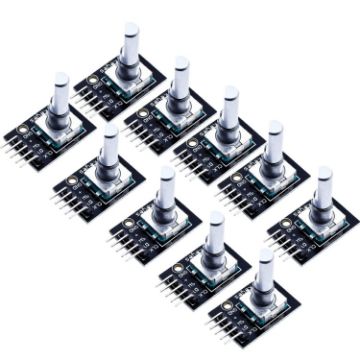
10 PCS KY-040 360 Degree Rotary Encoder Module
- Material: Electronic components + PCB
- Working voltage: 5V
- Number of pulses per revolution: 20
- The rotary encoder can count the number of output pulses during rotation in the forward and reverse directions by rotation. Unlike the potentiometer, the rotation count is unlimited. With the buttons on the rotary encoder, it can be reset to the initial state, that is, counting from 0.
- Working principle: The incremental encoder is a rotary sensor that converts the rotational displacement into a series of digital pulse signals. These pulses are used to control angular displacement. The conversion of angular displacement in the Eltra encoder uses the photoelectric scanning principle. The reading system is based on the rotation of the radial index disc (code disc) composed of alternating light-transmitting windows and opaque windows, and is simultaneously illuminated vertically by an infrared light source, and the light projects the image of the code disc onto the surface of the receiver . The receiver is covered with a layer of diffraction grating, which has the same window width as the code wheel. The receiver's job is to feel the changes produced by the rotation of the disc, and then convert the light changes into corresponding electrical changes. Then the low-level signal is raised to a higher level, and a square pulse without any interference is generated, which must be handled by an electronic circuit. The reading system usually uses a differential method, that is, comparing two different signals with the same waveform but a phase difference of 180 in order to improve the quality and stability of the output signal. The reading is formed based on the difference between the two signals, thereby eliminating interference.
A$14.87 A$17.54
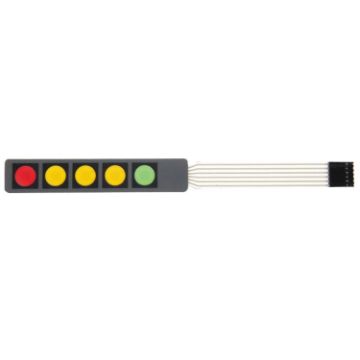
10 PCS Matrix 1 x 5 Keys Membrane Switch Keypad
- Made of quality material, durable to use.
- 6 pins pitch connector, 1x5 type 5 keys.
- White sticker can peel off for adhesive mounting.
- The back can be firmly fixed to the chassis surface.
- Used widely in industrial and home electronic equipments, instrument, etc.
A$18.66 A$22.58
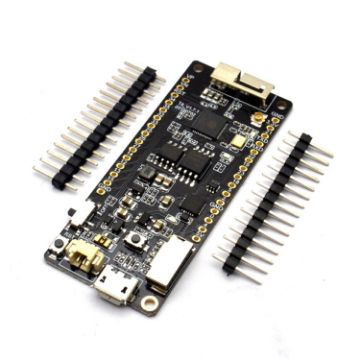
TTGO T8 V1.7 WiFi Bluetooth Module ESP32 WROVER 4MB FLASH 8MB PSRAM Module
- Espressif official ESP32-WROVER module
- New ESP32 version: REV1
- Wireless Internet
- Bluetooth
- 4MB flash memory
- 8MB PSRAM
- Lithium battery interface, 500mA maximum charging current
- Support TF memory card
A$25.79 A$31.71
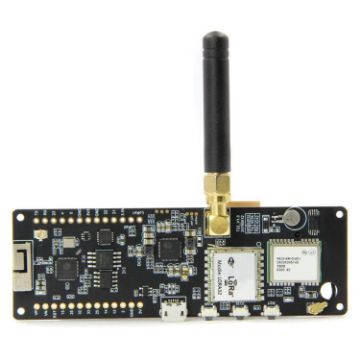
TTGO T-Beamv1.0 ESP32 Chipset Bluetooth WiFi Module 433MHz LoRa NEO-6M GPS Module with SMA Antenna, Original Version
- Working voltage: 1.8~13.7V
- Acceptable current: 10~114mA
- Emission current:
- 120mA at + 20dBm
- 90 mA lies at +17dBm
- 29mA at +13dBm
- Working frequency: 923MHz
- Transmitting power: + 20dBm
A$68.51 A$83.58
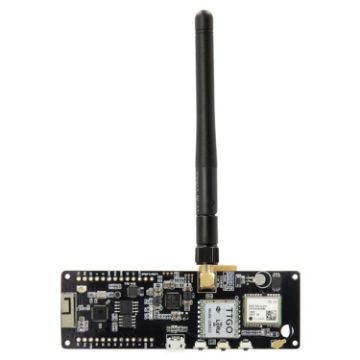
TTGO T-Beamv1.0 ESP32 Chipset Bluetooth WiFi Module 915MHz LoRa NEO-6M GPS Module with SMA Antenna, Original Version
- Working voltage: 1.8~13.7V
- Acceptable current: 10~114mA
- Emission current:
- 120mA at + 20dBm
- 90 mA lies at +17dBm
- 29mA at +13dBm
- Working frequency: 923MHz
- Transmitting power: + 20dBm
A$65.30 A$75.75
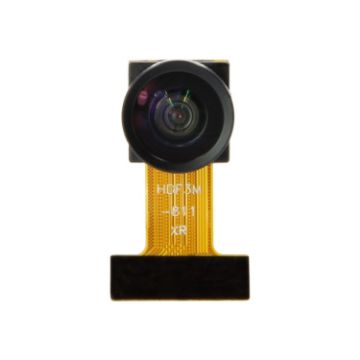
TTGO OV2640 Fisheye Single Lens Camera Module for T-Camera Plus ESP32-DOWDQ6 8MB SPRAM
- Product series: camera module
- Model: OV2640
- Purpose: video recorder
- Power: 3.3W
- Adapt to T-Camera Plus ESP32-DOWDQ6 8MB SPRAM
A$19.86 A$24.83
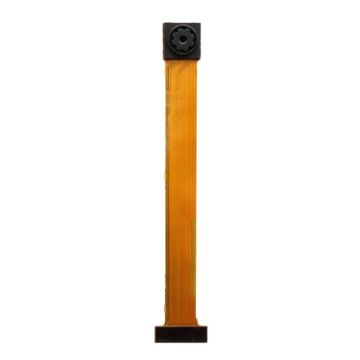
TTGO OV2640 Standard Extended Single Lens Camera Module for T-Camera Plus ESP32-DOWDQ6 8MB SPRAM
- Product series: camera module
- Model: OV2640
- Purpose: video recorder
- Power: 3.3W
- Adapt to T-Camera Plus ESP32-DOWDQ6 8MB SPRAM
A$19.03 A$22.08
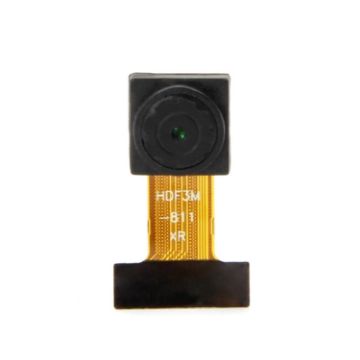
TTGO OV2640 Standard Single Lens Camera Module for T-Camera Plus ESP32-DOWDQ6 8MB SPRAM
- Product series: camera module
- Model: OV2640
- Purpose: video recorder
- Power: 3.3W
- Adapt to T-Camera Plus ESP32-DOWDQ6 8MB SPRAM
A$13.21 A$15.59

NEED HELP?
Payment options
